
Coin Collecting & Investing Basics – Costa's Fine Jewelry & Coins
If you've ever wondered whether that old penny in your change jar might be worth something, or if you've been curious about investing in gold and silver coins, you're not alone. Coin collecting and investing can seem complicated at first, but the basics are surprisingly straightforward.
Whether you're looking to start a meaningful hobby, preserve a piece of history, or make a smart investment, this guide from Costa's Fine Jewelry & Coins, an expert Waukesha coin shop, will walk you through everything you need to know to get started with confidence.
What Is Coin Collecting? (And Is It the Same as Investing?)
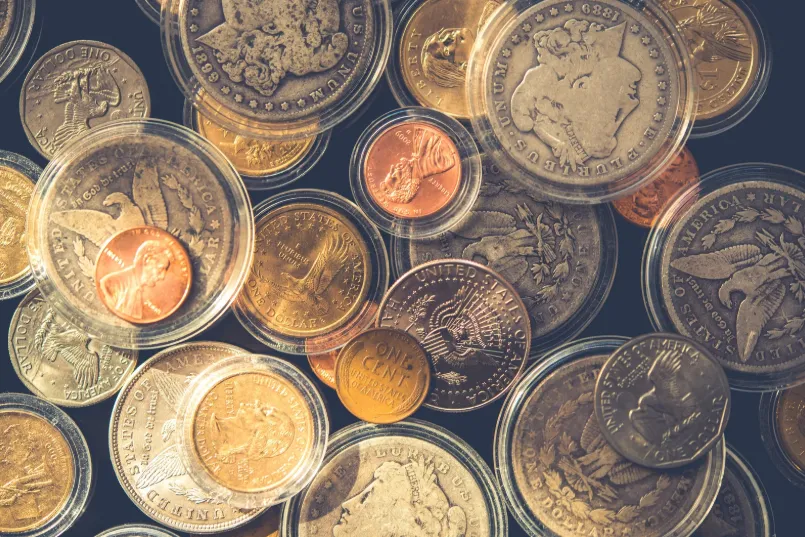
Coin collecting (also called numismatics) is simply the practice of gathering and studying coins. Some people collect for the joy of it, others for the historical connection, and many for investment potential.
Here's the key difference:
Collecting for enjoyment means you choose coins that interest you personally—maybe state quarters, coins from the year you were born, or pieces with beautiful designs. Value matters less than personal meaning.
Investing in coins means you're purchasing coins primarily because you expect them to hold or increase in value over time. You're treating them like stocks, real estate, or precious metals.
The good news? You can do both. Many people start collecting for fun and gradually learn which coins make good investments. At Costa's, we help customers navigate both paths based on their individual goals.
The Three Main Paths: Which One Is Right for You?
When starting out, most people follow one of three paths:
Path 1: Casual Collecting (Budget: $0-$100)
Check pocket change and build basic sets like state quarters
Fun, low-pressure hobby to share with family
Learn by doing without financial risk
Perfect for beginners who want to explore first
Path 2: Historical Collecting (Budget: $100-$1,000)
Focus on coins with stories and significance
Mercury dimes, Buffalo nickels, commemoratives
Combines history education with collecting
Moderate investment with appreciation potential
Path 3: Investment Focus (Budget: $500-$5,000+)
Concentrate on bullion and certified rare coins
Gold and Silver Eagles, investment-grade pieces
Wealth protection and portfolio diversification
Requires more knowledge and long-term commitment
Understanding What Makes Coins Valuable
Not all old coins are valuable, and not all valuable coins are old. Here are the key factors:
1. Rarity (How Many Exist)
Simple rule: Fewer coins = higher value. A 1909-S V.D.B. penny is worth thousands because only 484,000 were made. A 1990 penny is worth one cent because billions were made.
2. Condition (How Well-Preserved)
Coins are graded on a scale that basically asks: "How close is this to perfect?"
Simple grading guide:
Like new (Mint State): Looks like it just came from the mint, no wear = Most valuable
Lightly used (About Uncirculated): Tiny bit of wear, still excellent = Very valuable
Circulated but nice (Fine to Very Fine): Some wear but details clear = Moderate value
Well-worn (Good): Heavy wear, some details gone = Lower value unless very rare
Nearly smooth (Poor): Extremely worn = Usually only valuable if extremely rare
Tip: A coin in "like new" condition can be worth 10-100 times more than the same coin that's well-worn.
3. Demand (What People Want Right Now)
Some coins are "hot" because collectors currently want them. This changes based on economic conditions (gold coins rise during uncertainty), collector trends, and historical anniversaries.
4. Metal Content (What It's Made Of)
Some coins are valuable for the gold or silver they contain. Pre-1965 U.S. dimes, quarters, and half-dollars contain 90% silver.
Types of Coins Explained Simply
Understanding the main coin categories helps you decide where to focus your collection or investment:
Bullion Coins (Investment Metal Coins)
American Gold Eagles, American Silver Eagles, Canadian Gold Maples
Valued primarily for precious metal content
Silver starting around $30-40 each; Gold starting around $2,000+ each
Best for: Investment, wealth protection, portfolio diversification
Collectible Coins (Numismatic Coins)
State quarters, Wheat pennies, Mercury dimes, commemoratives
Valued for rarity, history, and condition beyond metal content
Price range: Free (pocket change) to thousands of dollars
Best for: Hobby collecting, historical interest, long-term investment
Rare/High-Grade Coins (Serious Investment Coins)
Certified pieces, error coins, pre-1933 U.S. gold coins
Scarce coins in exceptional condition
Starting at $500-$5,000+, can reach millions
Best for: Experienced collectors, significant investment portfolios
How to Actually Get Started (Step-by-Step)

Step 1: Start with What You Have (Week 1)
Go through your pocket change, piggy banks, and that jar on your dresser. Look for:
Older pennies: Before 1959 (they're worth checking)
State quarters: Try to collect all 50 states
Anything before 1965: Dimes, quarters, and half-dollars might be silver
Foreign coins: Fun to examine and research
Unusual looking coins: Different colors, errors, or odd dates
Cost: $0 What you'll learn: How to examine coins, what dates to look for, how to use a magnifying glass
Step 2: Get Basic Tools (Week 2)
Essential tools include:
Magnifying glass with light ($10-30): See details clearly
Coin folders or album ($5-20): Organize your finds
Reference book like "The Red Book" ($15-20): Look up coin values
Cotton gloves (optional, $5): Handle valuable coins without oils from fingers
Cost: $30-75 total
Step 3: Get Expert Evaluation (Week 3-4)
Bring your coins to Costa's Fine Jewelry & Coins for a free, no-pressure evaluation. We'll:
Tell you if anything in your collection has significant value
Explain what makes certain coins valuable
Show you examples of different coin types from our inventory
Answer all your questions with no obligation to buy
Help you understand your best next steps
Cost: Free
Step 4: Make Your First Intentional Purchase (Month 2)
Based on what interests you, choose one of these starter options:
For casual collectors:
Complete folder of Lincoln pennies (1959-present): $20-50
Set of uncirculated state quarters: $30-60
For history buffs:
Single Mercury dime or Buffalo nickel: $5-30
Commemorative coin from a meaningful year: $20-100
For investors:
One Silver Eagle coin: $30-40
1/10 oz Gold Eagle: $200-250
Step 5: Expand Your Knowledge (Ongoing)
Join online communities (CoinTalk, Reddit r/coins)
Attend local coin shows (we can tell you when and where)
Read articles and watch videos about specific coins
Visit Costa's regularly to see new inventory and ask questions
How to Avoid Common Beginner Mistakes
Never clean coins - Cleaning destroys value by 50% or more; collectors want original condition
Don't assume old equals valuable - A 1950 penny is worth 1 cent; research before assuming worth
Start small, learn first - Avoid expensive purchases your first week; build knowledge gradually
Skip TV ads and mall pop-ups - These "collectible" coins are typically overpriced with little investment value
Use proper storage - Avoid plastic bags or jars; use archival-quality holders to prevent damage
Beware online counterfeits - About 10% of coins sold online may be fake; buy from reputable dealers with authenticity guarantees
Investment Considerations: The Honest Truth
Coin collecting can be profitable, but it's not a get-rich-quick scheme. We believe in setting realistic expectations with our customers.
Realistic Expectations:
Best-case scenarios:
Rare coins in top condition can appreciate 5-15% annually over decades
Bullion coins track gold/silver prices (historically 8-10% average annual return over long periods)
Finding a rare error coin could net significant unexpected value
Typical scenarios:
Most coins appreciate slowly, like real estate
Bullion provides wealth preservation, not dramatic growth
Enjoyment and education are often the primary "returns"
Risks to understand:
Market values fluctuate, especially for precious metals
Selling coins often involves dealer commissions (10-20%)
Liquidity varies—some coins sell quickly, others take time
Counterfeit risks when buying from unknown sources
Storage and insurance costs for valuable collections
Start Your Collecting Journey Today!
Whether you're interested in building an investment portfolio through bullion, preserving family heirlooms, or exploring the fascinating world of rare coins, expert guidance makes all the difference.
Visit our Waukesha showroom to explore our extensive inventory and speak with our knowledgeable staff. We'll help you understand current market values, identify opportunities aligned with your goals, and provide ongoing support as your collection grows.
Ready to begin? Bring your coins for a complimentary evaluation, or simply stop by to discuss your collecting interests with our team. Contact us today or call (262) 549-5512 to book a visit at Costa's Fine Jewelry & Coins in Waukesha, WI, today.


